
Church Membership
Author |
|
Availability |
In Stock |
Product Code |
ARB.155 |
ISBN |
978-1-917360-33-3 |
Postage Points |
4 |
Length |
304 pages |
Price
£10.99
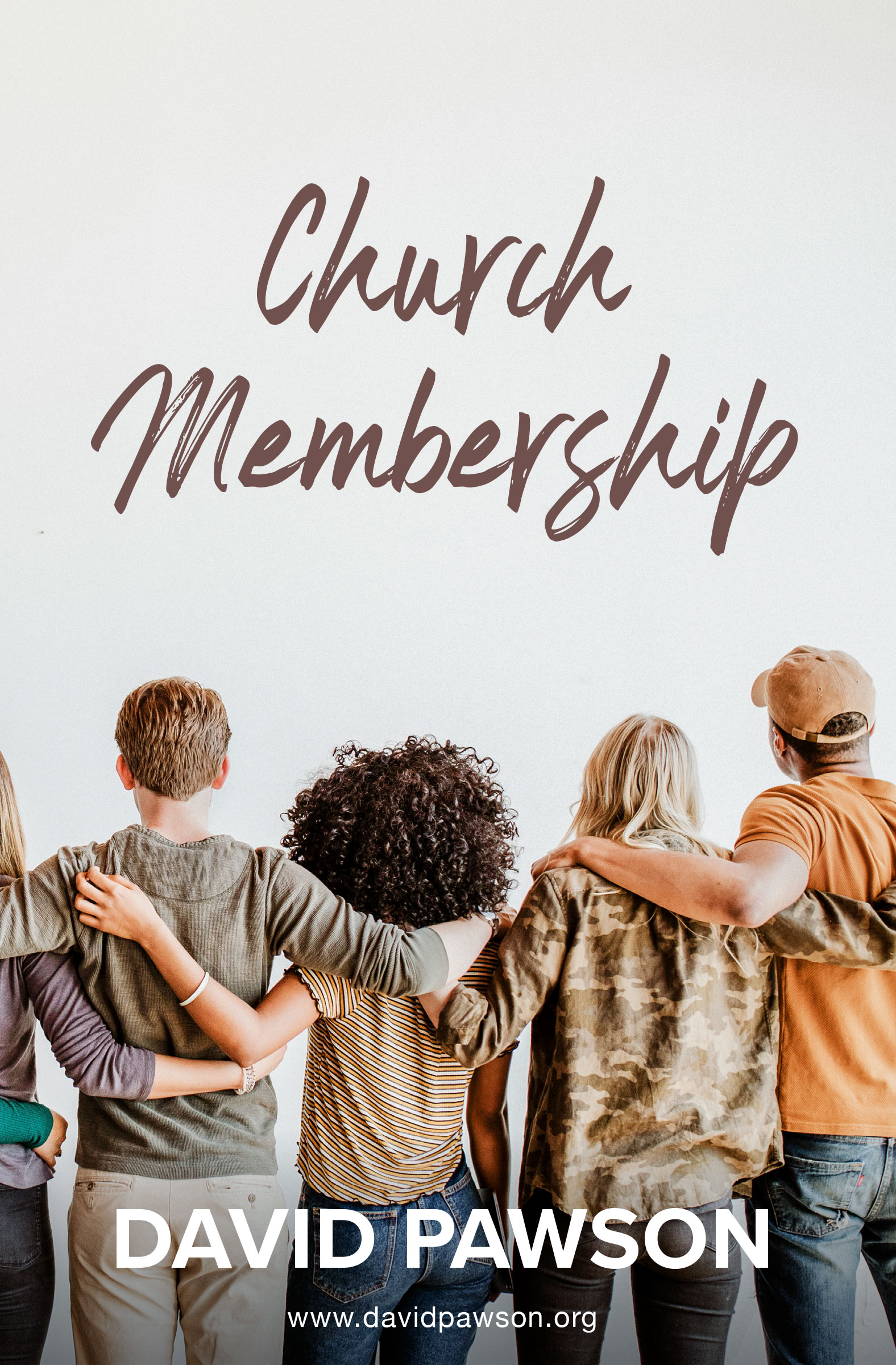
Drawing on his experience of pastoring a church that modelled itself on the New Testament church, David Pawson argues that the latter’s governance was not that of a democracy but was instead founded on "corporate leadership". This structure enables a church that adopts it to "become not only self-governing but also self-supporting". David states that "the scriptural pattern for the church is elders with a distinction recognised between pastor elders and teacher elders," including "a presiding elder", and "elders and deacons" working "together", crucially with Christ as head of the church. David regards this as a model for the modern church.
To those who view churchgoing as an optional extra, or select their church based on preference rather than proximity to their home, the emphasis on corporate leadership with an involved membership may come as a shock. It is a focus on structure and discipline that differs markedly from the approach taken in some denominations. In the New Testament church, the membership will experience every facet of church life with the goal of enabling the church body to worship as one, have fellowship with each other, evangelise, and establish the building as a prominent place of worship in the community. This requires obedience to God and the elders who serve him. The emphasis on discipline and obedience (to God and the leadership) will surprise some readers (and churchgoers) who are used to other approaches to governance.
There are further surprises. In tackling the issue of money, David discusses legitimate and illegitimate ways of earning for members of the church. In addressing the issue of giving, he critiques modern tithing, arguing that instead members should give in proportion to their wealth rather than a set sum. Giving, which he sees as a form of worship, must be motivated by a sense of gratitude towards God-a feeling that is also experienced when receiving communion. This is a vision of an inclusive church that enables fellowship between people from diverse backgrounds who are brought together as one body in Christ.